Small Changes Support Climate
Minimize Meat for Your Health
Eating less meat brings up lots of questions and concerns. Debate around this topic goes from A to Z — ‘I Adore meat!‘ to ‘Zero meat intake is the only way to go!‘ Personally, I fall somewhere in-between but more on the “less meat” end of the spectrum. Let’s talk about some of the benefits of eating less meat, particularly processed red meat like hotdogs, deli meat, and bacon. (I know you didn’t really want to hear that part about bacon, but please hear me out.)
People choose to eat less meat for many reasons and right now I will only focus on the health aspects. When you choose to eat less meat you naturally will choose more meals based on plants. Plant-based proteins such as beans, lentils, whole grains, nuts, and vegetables are high in fiber, filling you up and helping you maintain a healthy weight. And choosing organic plant foods helps to avoid the harmful chemical glyphosate, sold commercially as the weedkiller Roundup®. While eating more of these vegetable foods and less red meat you can lower your risk of death from heart disease, stroke, diabetes, and certain types of cancer. If you are concerned about your blood cholesterol, eating a plant-based diet can decrease your levels of low-density lipoproteins, or “bad cholesterol, which are associated with an increased risk of cardiovascular disease. A recent meta-analysis of 30 randomized clinical trials published in the European Heart Journal found that bad cholesterol fell 10% and total cholesterol fell 7% for those eating a plant-based diet compared with those eating both plants and meat.
Meats also can contain a lot of fat that has accumulated toxins. In past posts, I wrote quite a bit about soda pop. But there’s another type of POP you should be aware of. Persistent Organic Pollutants (POPs) are a group of organic compounds that have toxic properties, persist in the environment, accumulate in food chains, and pose a risk to human health and the environment.
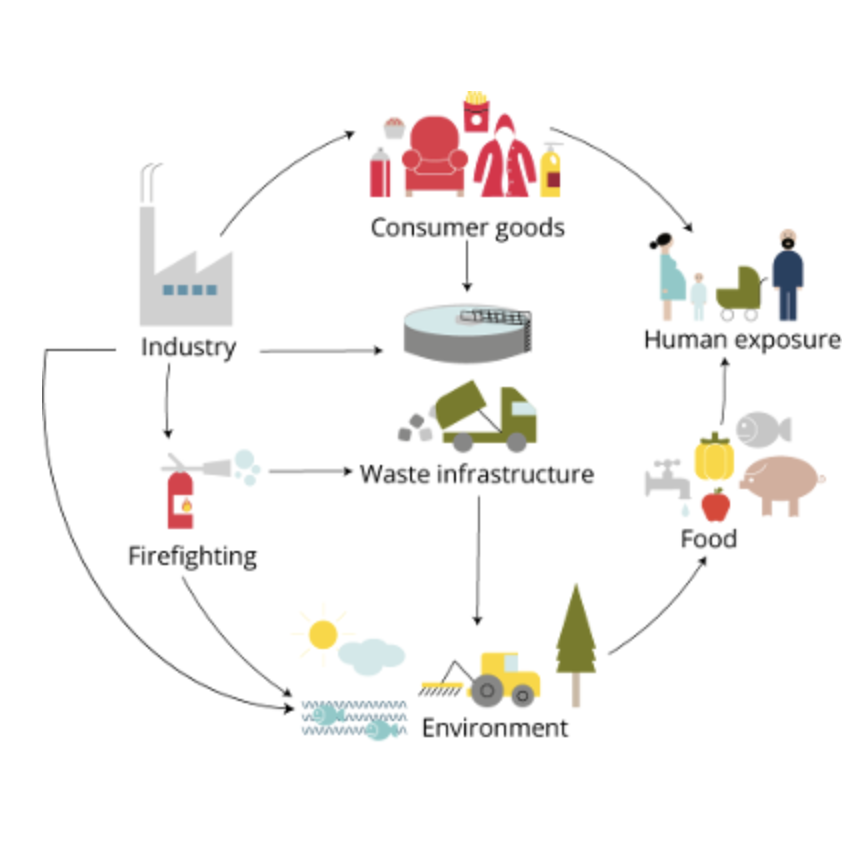
POPs travel long distances, they are found in the environment around the globe, including close to industrial and urban settings, but also in remote locations such as the Arctic, high mountains and Pacific Ocean trenches at 7-10,000 meters below sea level.
~ from the UN Environment Program: Why do persistent organic pollutants matter?
According to Dr. Amanda McKinney, 11 of 21 POP compounds come to us through food, primarily animal foods. The red meat–cancer connection has associations with the iron in red meat and the protein itself. Furthermore, POPs are in red meat even if raised organically. Scientists have also measured endocrine-disrupting chemicals such as BPA, PFAS, and phthalate suspected in breast, prostate, and testicular cancers; diabetes and obesity; autism, ADHD, Parkinson’s Disease, Alzheimer’s Disease, ALS; and infertility. You are primarily exposed to POPs by eating fish, meat, dairy, and plastic food wrappers and containers.
I apologize if I’ve frightened you. All I’m hoping is that you’ll see that Meatless Monday and making more meatless meals are healthy practices.
If I skip Meat can I get all the Protein that I need?
You may be wondering, “If I limit or cut out meat will that make my diet deficient in protein?” Most of us consume enough protein, especially if we are Americans. The recommendation is only about 50 grams of protein each day for adults, but for older adults it appears to be ideal to have 25-30 grams of protein at each meal.
| Serving of Food | Approximate Grams of Protein |
| Meat, chicken, fish (3 ounces; deck of cards size) | 20 |
| Yogurt (1 cup) | 10 (20 – if Greek yogurt) |
| Peanut Butter (2 tablespoons) | 14 |
| Beans, peas, lentils (1/2 cup) | 10 |
| Eggs (2 large) | 10 |
| Milk (skim cow-milk or soy milk) | 8 |
The Dietary Guidelines for Americans recommends eating a variety of proteins such as eggs, low-fat milk and products made from it, beans, peas, lentils, soy products, and unsalted nuts and seeds. If the source of protein is high in calories — like nuts, peanut butter, and nut butters — pick smaller portions: a small handful of nuts or 1 to 2 tablespoons of peanut butter.
When eating out, meat portions tend to be much larger than the size of the palm of your hand or a deck of cards, which is the recommended portion size. Bring your own glass takeout container and you’ll have some delicious leftovers.
By choosing a variety of plant proteins and including them at each meal you will meet your daily protein intake goals. Think hummus (made from chickpeas), nut butters (made from all kinds of nuts), chia seeds, oats, and quinoa to sneak plant proteins into your day.
An Added Benefit to Meatless Monday? A Cleaner Climate
I hope I’ve illustrated that eating less meat is a great idea. But if I haven’t here’s a Healthy You > Healthy Earth > Healthy You point of view: According to Project Drawdown, animal agriculture is a significant source of carbon pollution. By focusing our diets on plant-based foods we can help limit land clearing, fertilizer use, and greenhouse gas emissions.
Among the most fundamental research findings on this topic is that healthier diets tend to also be low-emission diets. ~Project Drawdown: Plant-Rich Diet
And guess what, while saving the environment you’ll save money and quite likely save on future healthcare costs, too. Remember to make the healthy choice the easy choice by having your plant-based options available, visible, and enticing. And always remember that not all plant foods are healthy. Sugar-sweetened beverages are an example of that point!
The EAT-Lancet Commission concluded that the planet can tolerate us humans eating two servings of animal-sourced foods daily: one dairy and one combination of fish or poultry a couple of times a week, some eggs, and red meat just once a week. This type of dietary pattern should not include foods high in refined grains and sugar. By growing and eating foods locally, especially in your own garden or through a CSA, you can have an even greater impact on lowering your carbon footprint.
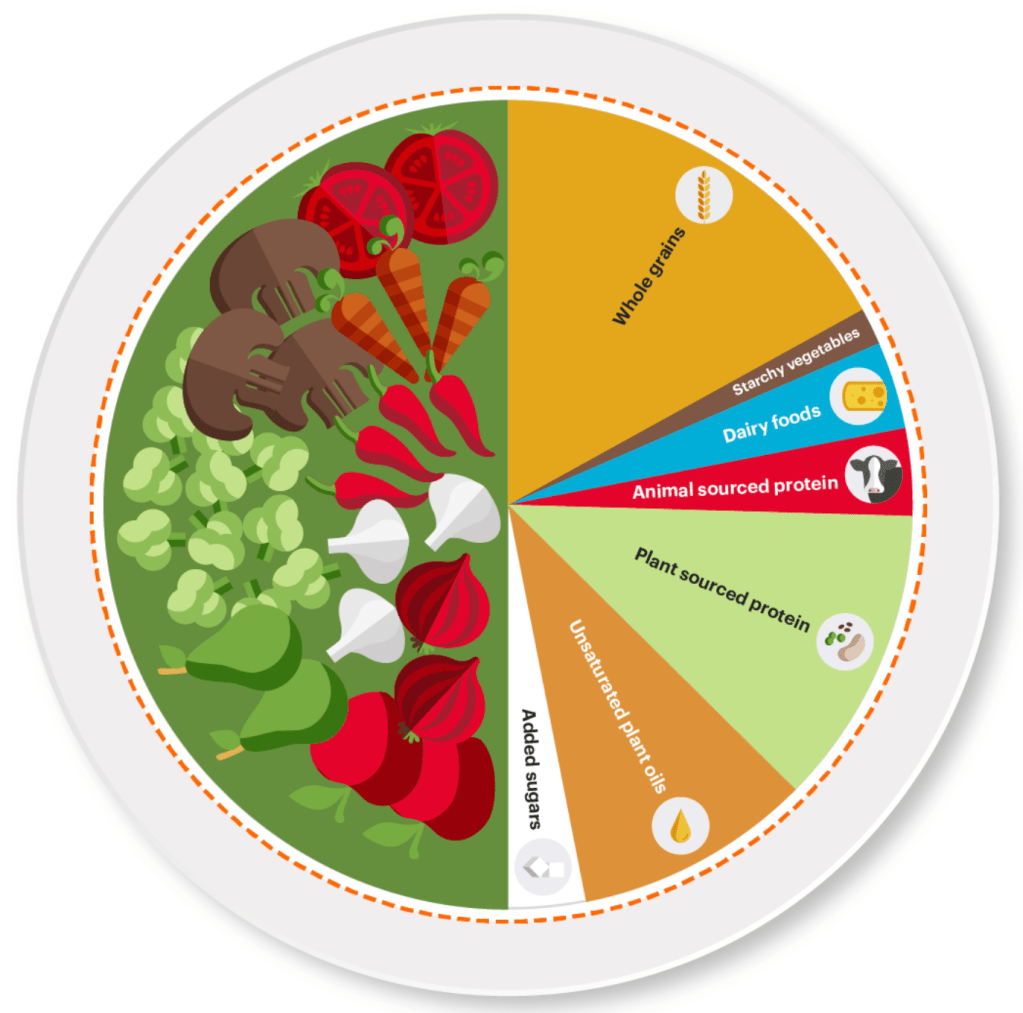
The Planetary Health Diet is for adults all over the globe to use as a reference. The graphic symbolizes that half of our daily intake ideally should be fruits and vegetables.
The other half consists of mostly whole grains, plant proteins, unsaturated plant oils, moderate amounts of meat and dairy, and limited sugars and starchy vegetables.
Becoming a vegetarian or a vegan can be a healthy option for you and the planet. But you certainly can fit in some animal proteins, too. Take the Planetary Health Challenge #planetaryhealthchallenge based on EAT-Lancet’s optimal diet for people and planet. Try these Planetary Health Recipes!
Take Action & Join the Movement
EAT’s new podcast: Let’s Rethink Food!
EAT x Iman Meskini: How to eat to save the world
EAT’s Instagram: Get updates and get involved
EAT-Lancet Report: Read the Summary Report
EAT’s blog: Read how Dr. Sonja Vermeulen explored the diet

 Healthy You • Healthy Earth • Healthy You
Leave a comment