Making Healthy Beverage Choices Can Be Healthy for the Planet
Facing the Truth ABOUT Your Sweet Tooth
There’s not much I can write about sugar-sweetened and artificially sweetened beverages that hasn’t already been said. But here are some highlights (or rather lowlights!).
- People who drink sweetened beverages, soda in particular, tend to gain more weight than those who do not.
- People who drink lots of soft drinks consume more calories because soda doesn’t appear to fill us up.
- Sugar-sweetened beverages cause our blood sugars to go up and down, and that can make us hungrier.
- Drinking beverages that are artificially sweetened have a strange effect that can cause sugar cravings, and therefore they are linked to weight gain not weight loss.
So it’s a good idea to be careful with sodas, sports drinks, energy drinks, lattes, and even fruit juices since these are all linked with weight gain, increased risk for diabetes, and metabolic syndrome.
American Heart Association, How much sugar is too much?Almost half of added sugars in our diets come from beverages!
- soft drinks – 25%
- fruit drinks – 11%
- sport/energy drinks – 3%
- coffee/tea – 7%
A Bit About BOOZE
In a recent article in The New York Times, the authors shared that alcohol isn’t all that great for our health, even when consumed in moderate levels. Even at very low levels, alcohol consumption is linked to liver disease, cancer, and heart disease. And, like the sweet beverages discussed above, alcohol consumption — particularly if you regularly drink a lot — makes it more likely you’ll gain weight.
And then there’s all the PLASTIC!
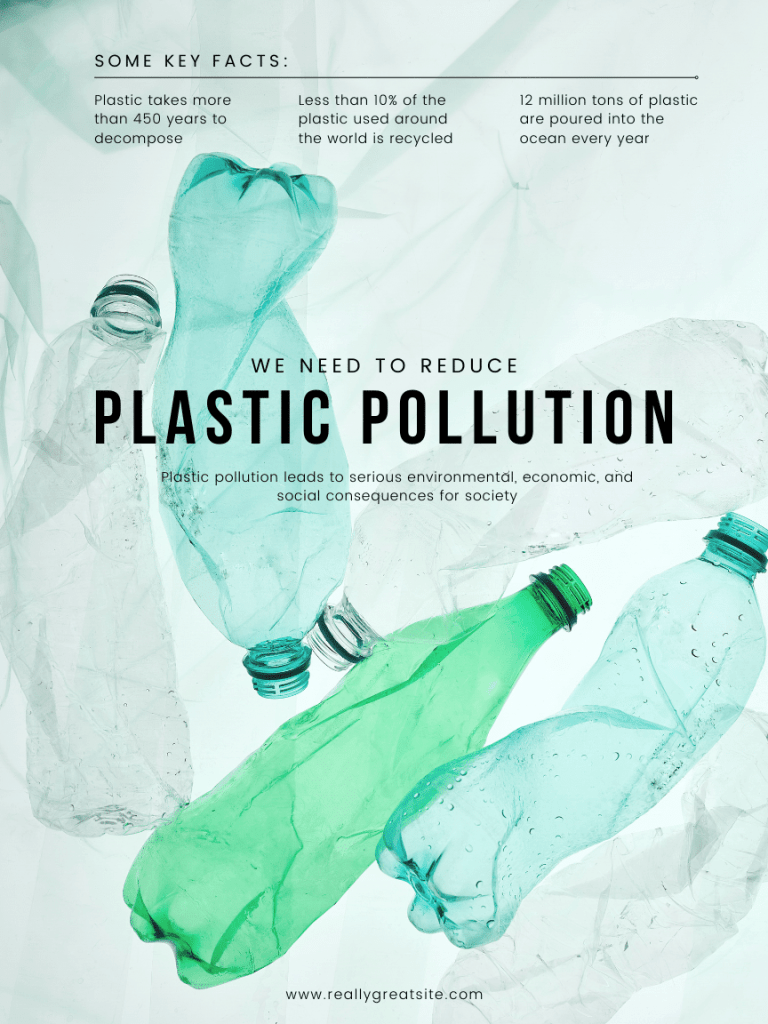
Most of the beverages you consume are going to arrive to you in some type of plastic container. These plastics are produced from petrochemicals and often are disposed of by incineration, contributing to air pollution and greenhouse gas emissions. Beyond Plastics, a national project based in Bennington, VT, published a 2021 report on implications for our environment and health in The New Coal: Plastics and Climate Change, noting that “As of 2020, the U.S. plastics industry is responsible for at least 232 million tons of CO2 gas emissions per year. This amount is equivalent to the average emissions from 116 average-sized (500-megawatt) coal-fired power plants. The U.S. plastics industry’s contribution to climate change is on track to exceed that of coal-fired power in this country by 2030.”
Plastic is a “forever” material. It never entirely deteriorates but breaks down into microplastics and even smaller nanoplastics. These micro and nanoplastics are now found in soils, terrestrial ecosystems, marine ecosystems, the air we breathe, and in human placentas, feces, lung tissue, and cancer tissue specimens. (Environment International, 2021). Each of us may be ingesting a credit card’s equivalent of plastic (5 grams) each week (WWF International, 2019). These particles may carry any of the 144 chemicals hazardous to human health used in manufacturing plastics (Endocrine Society, 2020).
Plastics clearly endanger our health, well-being, wildlife, and environment. There is growing evidence that the adverse effects of plastic production and disposal are disproportionately borne by low-income communities, communities of color, and Indigenous groups, making this also an environmental justice concern. And the risks are increasing. The US plastics industry is the third largest manufacturing industry in the United States (Polymer Products Database, 2021). Plastic production is forecast to grow 60% by 2030 and triple by 2050 (Center for International Environmental Law, 2019).
My Aha! moment
So what does squashing your sweet tooth have to do with climate change? Let me explain.
For the past almost two years, I have been completely consumed with working on rethinking plastic, both personally and for New Hampshire where I live. The amazing climate activists in the NH Network’s Plastics Working Group have been leading a grassroots effort to educate people about the harms of plastic. Naturally, they want to bring a strong bottle bill to New Hampshire and naturally I want to help in that effort.
But then I looked around my home. And lo and behold, I did not see a single plastic bottle that I could return for a deposit, even if New Hampshire had a Bottle Bill!!!
ReThink Your Drink, Rethink Plastic – Either Way HelPs Mother Earth
Okay. So I’m lucky — I do not have a sweet tooth, and alcohol does nothing for me but cause middle-of-the-night insomnia. When I had non-invasive breast cancer more than 20 years ago — and learned about all the estrogen disrupters in plastic and the adverse effects of alcohol consumption on breast cancer risk — I started watching not only what my food and beverages contained but also what they were packaged in.
To cut to the chase, even though I am going to dive right in to work to help bring a container recycling program to New Hampshire, personally, I do not need a Bottle Bill!
I hope you’ll consider joining me in cutting down on sodas, artificially sweetened beverages, and alcohol — mainly if these are coming to you in plastic. Making this healthy choice can do wonders for your health and body weight while helping rid the land and sea of plastic pollution at the same time.
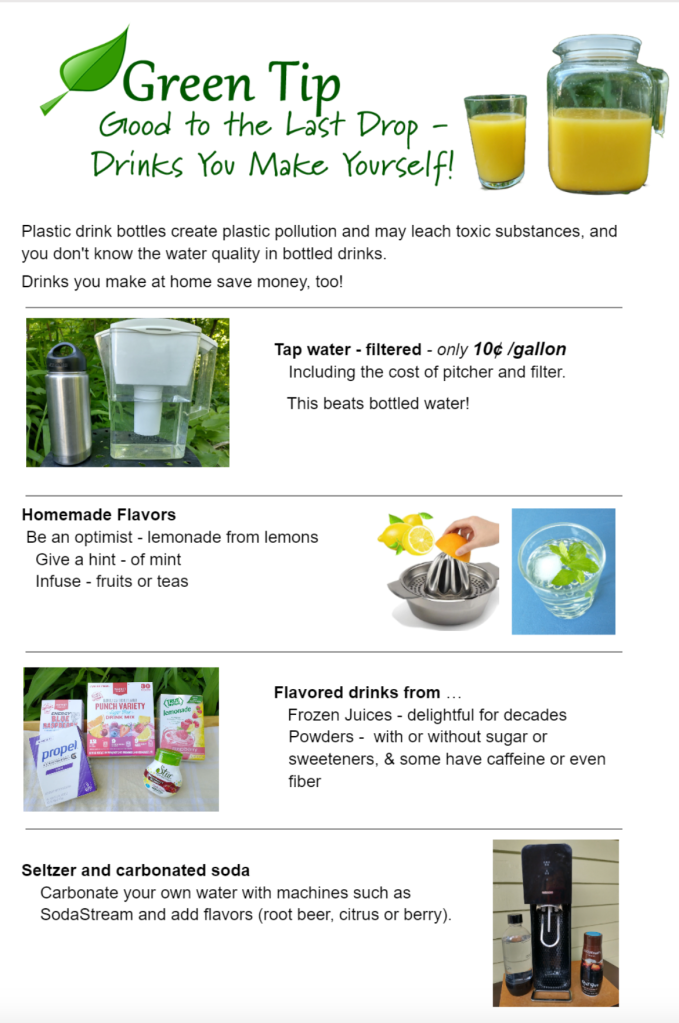
- Switching from sweetened drinks to water won’t work if you instead choose water that comes in plastic. I drink filtered tap water. If you need some flavor, add fruit slices or herbs like mint. If you like bubbles, find club soda or sparkling water in glass.
- Make your own tea or coffee. I love green tea and purchase organic, loose tea from arbor teas to avoid plastics and trash from teabags. Sun tea is delicious in the summer!
- Buy your milk in glass instead of plastic. I will write more about milk in another post.
Here are other ideas from the Dover Plastic Reduction Group, but do pay attention to the amount of sugar in any frozen juices and powdered drink mixes.
We are not looking for perfection here. However, the more often you make better beverage choices — considering not only their contents but their packaging — the more often you’ll do something healthy for you and for the earth.
Please leave a comment to let me know how you — and your sweet tooth — are getting along!
 Healthy You • Healthy Earth • Healthy You
Leave a comment